
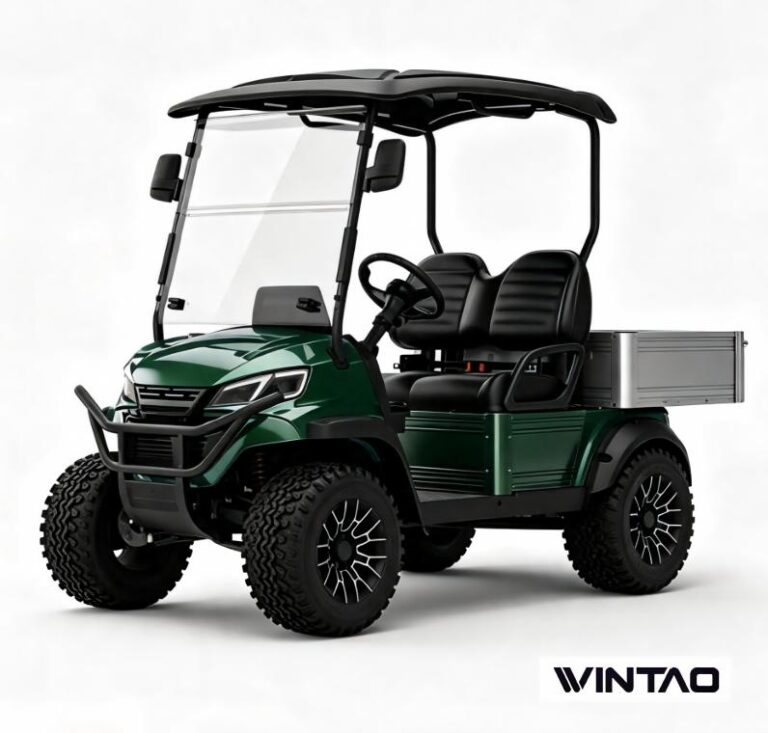
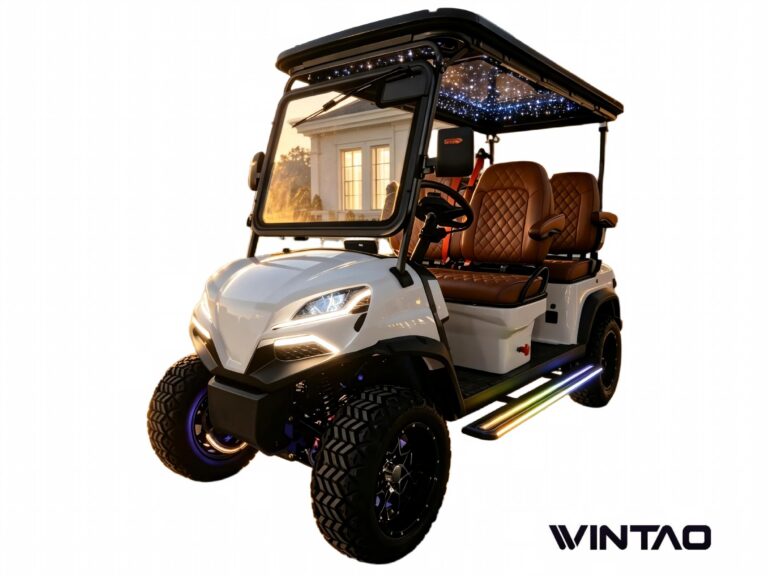
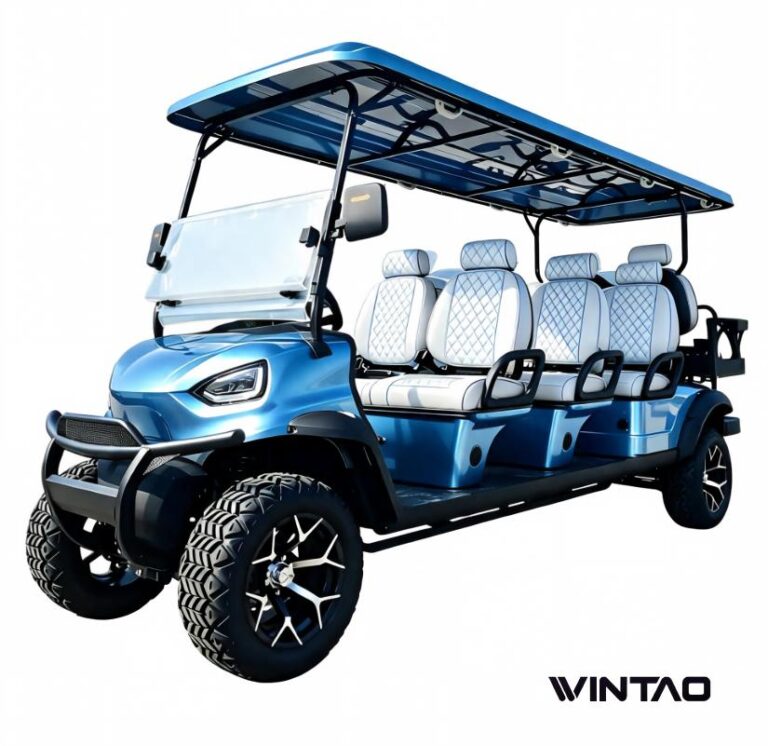
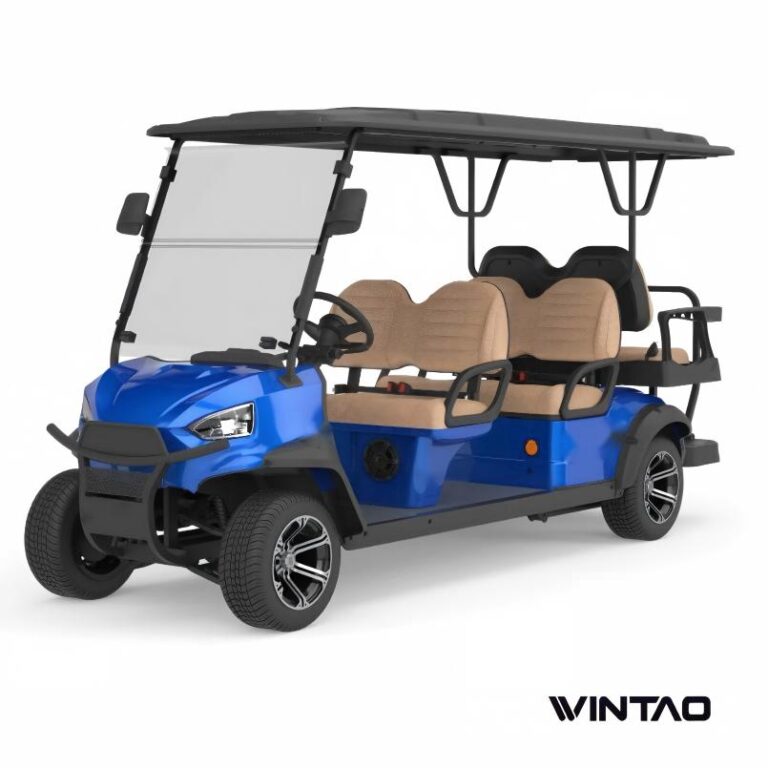
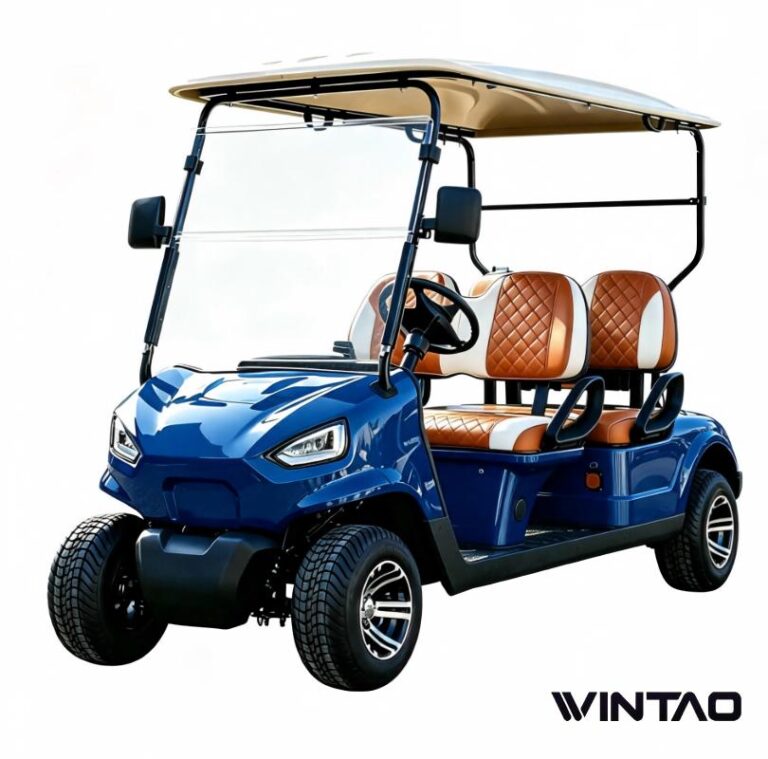
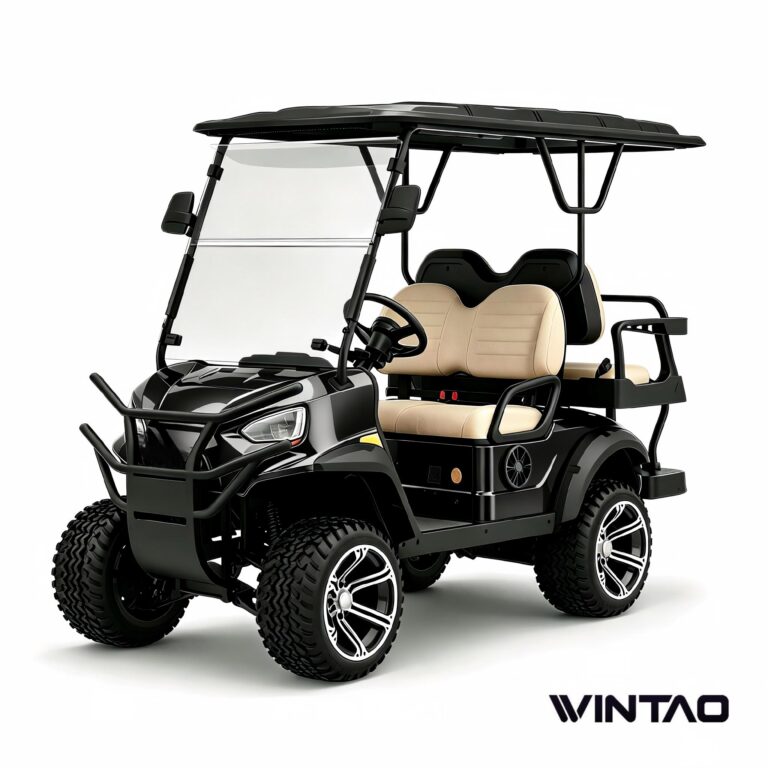
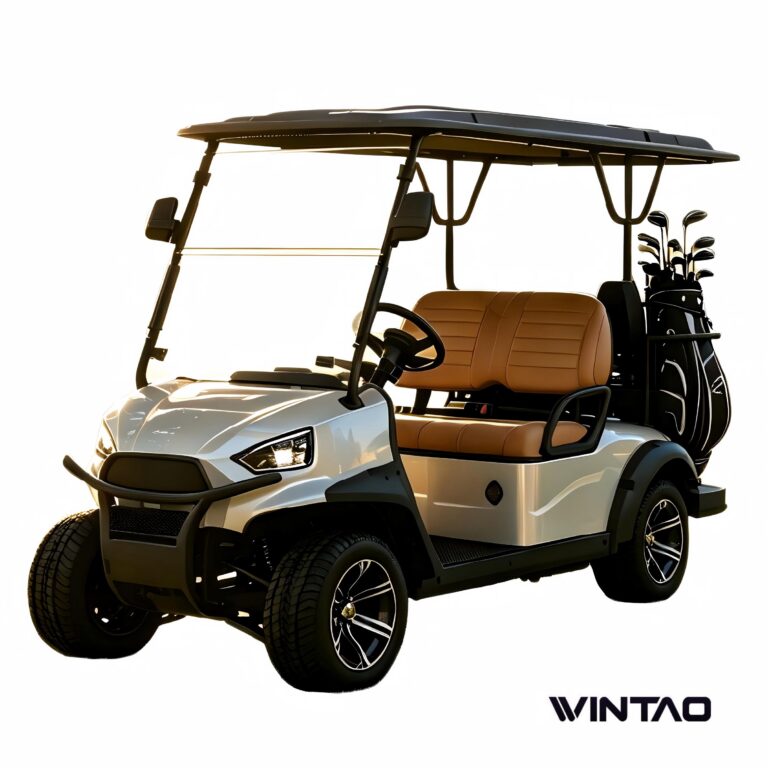
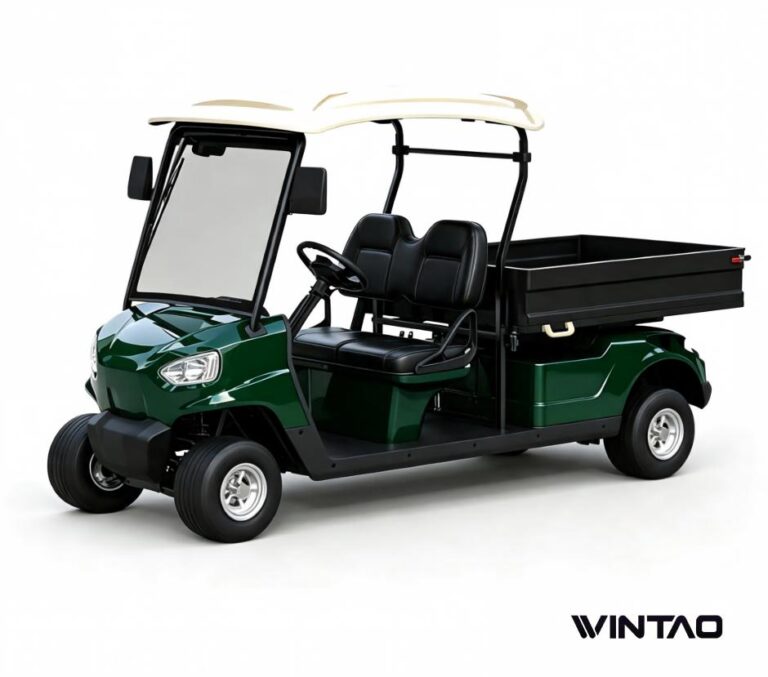
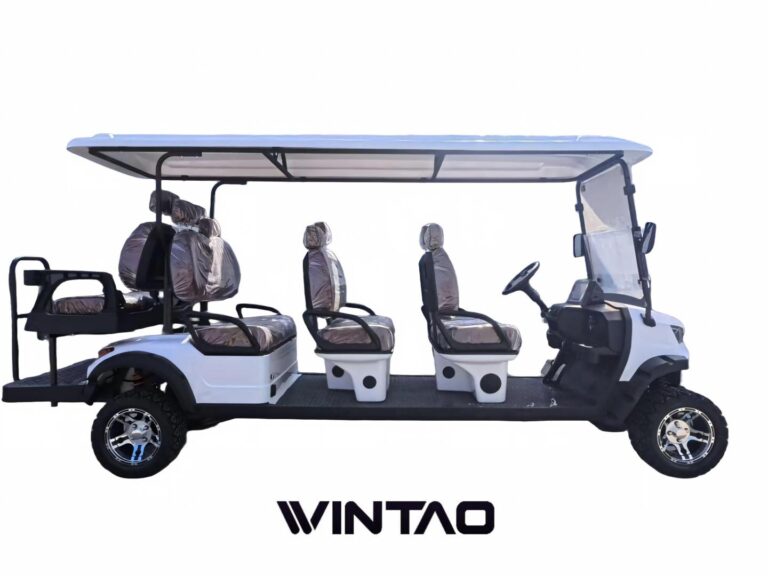
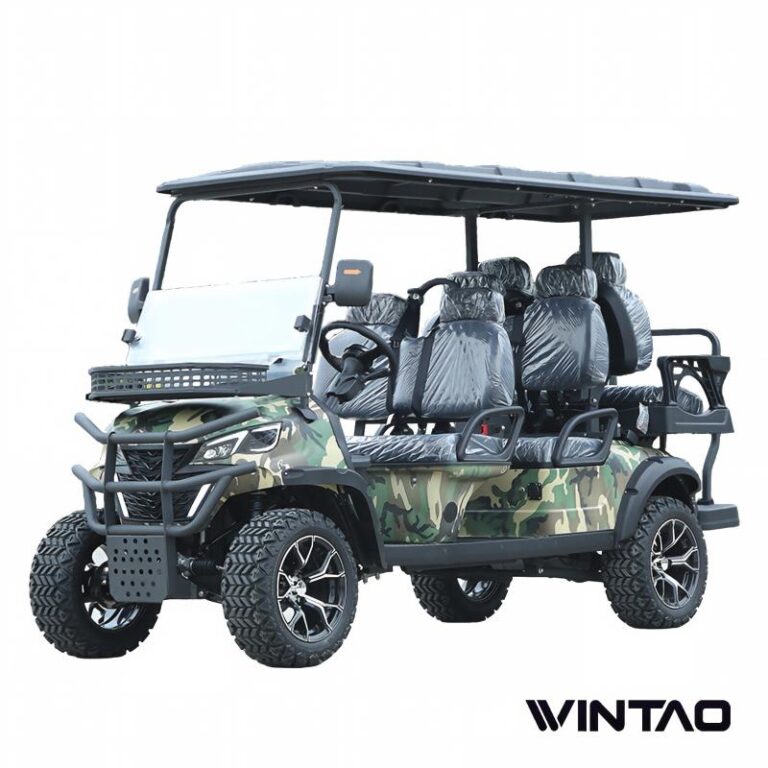
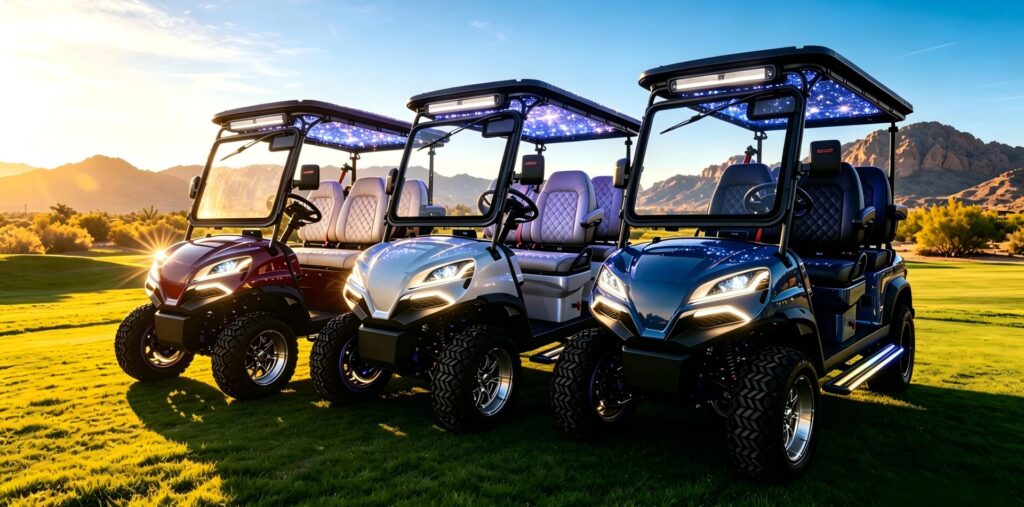
If you’re shopping for compact small electric vehicles for your property, community or local commute, you have likely run across three confusing terms: golf cart, LSV, and NEV. Many buyers mix them up, but these are three distinct vehicle categories, with big differences in top speed, road legality, safety equipment and allowed use cases. Choosing the wrong one means you may not legally drive it on public roads in your area.
What Are Golf Cart, LSV, and NEV Exactly?
1.1 Standard Golf Cart
Traditional golf carts are built primarily for golf course use and private property transportation. They are the most basic type of low-speed electric vehicle with no federal road-legal certification.
- Top speed: Typically 12–15 mph
- Road legal: Not street-legal for public roads, limited to private areas
- Safety requirement: No mandatory DOT safety parts, no standard VIN
- Best for: Golf courses, private estates, closed resorts, exclusive private community travel
1.2 LSV (Low-Speed Vehicle)
LSV stands for Low-Speed Vehicle, a strictly regulated, federally recognized vehicle classification in North America. It is the only fully DOT-certified option among the three types.
- Top speed: 20–25 mph (US federal standard limit)
- Road legal: Fully street-legal on public roads with speed limits ≤35 mph (state-dependent)
- Safety requirement: Full DOT compliance, including headlights, turn signals, seat belts, rearview mirrors, and official VIN
- Best for: Daily neighborhood commutes, local errands, resort transport, legal public road driving
1.3 NEV (Neighborhood Electric Vehicle)
NEV stands for Neighborhood Electric Vehicle. Unlike LSV, NEV is defined by local municipal rules instead of strict federal standards. In most scenarios, NEVs are functionally similar to LSVs but lack unified certification rules.
- Top speed: 20–25 mph
- Road legal: Conditionally legal, strictly depends on local city and county ordinances
- Safety requirement: Variable certification standards, not all NEVs meet full DOT LSV requirements
- Best for: Gated communities, coastal towns, master-planned residential areas with local NEV permits
Golf Cart vs LSV vs NEV Quick Comparison Table
| Comparison Item | Golf Cart | LSV | NEV |
|---|---|---|---|
| Max Speed | 12–15 mph | 20–25 mph | 20–25 mph |
| DOT Certified | No | Yes (Full Federal Standard) | Depends on Local Rules |
| Public Road Legal | Not Allowed | Allowed (≤35 mph Roads) | Limited & Region Restricted |
| Official VIN Available | No | Yes | Partial |
| Main Usage Scenario | Private Property Only | Street Legal Daily Commute | Community-Only Travel |
How to Choose the Right Vehicle for Your Needs
3.1 Choose a Standard Golf Cart If…
You only drive on fully private land, such as golf courses, private villas, and closed resorts. If you never need to access public roads, a traditional golf cart is the most cost-effective choice with simple maintenance and affordable pricing.
3.2 Choose a DOT-Certified LSV If…
You need street-legal functionality for neighborhood roads and local public traffic. LSV is the only reliable federally certified option for registration, licensing, and insurance in most US states. For buyers prioritizing legality and versatility, LSV is the top pick.
3.3 Key Notes for Buying NEV
Many merchants confuse NEV and LSV concepts. Remember: NEV has no unified federal certification standard. Never judge a vehicle’s legality only by the “NEV” label. Always verify whether the product meets official LSV DOT standards and check your local traffic regulations before purchasing.
Frequently Asked Questions
4.1 Is an LSV the same as a regular golf cart?
No. Standard golf carts lack DOT safety certification and legal road access. LSVs upgrade the basic golf cart platform with complete safety configurations and federal certification for public road driving.
4.2 Can I convert a regular golf cart into an LSV?
Generally not possible. Simple retrofits (lights, mirrors) cannot obtain official DOT certification. LSV certification is a factory-level whole-vehicle qualification, not a post-purchase modification.
4.3 Are NEVs legal everywhere in the United States?
No. NEV legality varies greatly by state, city, and county. Some regions support NEV road registration, while others strictly prohibit non-LSV low-speed vehicles on public roads.
Final Buying Checklist
- Confirm your driving scenarios: private property only or public road commuting
- Prioritize DOT-certified LSV if street-legal driving is required
- Check local state and municipal low-speed vehicle regulations
- Match vehicle speed, seating, and performance to daily usage needs
Browse our collection of DOT-compliant LSV and classic golf carts to find your perfect low-speed electric vehicle for personal and commercial use.